Thursday, 28 May 2020

Open Gardens Sunday March 15 - Bordeira, Loulé

The first of the spring garden visits and we were invited to see two gardens in the Bordeira area. We were very grateful to the owners for allowing the visits to go ahead. In case you were wondering, with the closures and cancellations because of the coronavirus, we decided to go ahead with the garden visits on Sunday as long as the garden owners were happy, as we were a small group, it is outside and at that date, cases of the illness in the Algarve were very low. It will, however, be the last event until at least May.

Quinta de Benatrite - About the garden from Janet and Edward


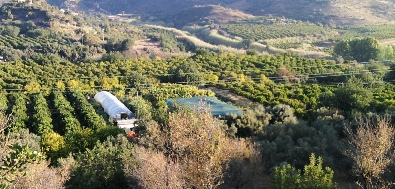
Some of you will know this garden from last year. They mow the green areas from November to about May. It will be green now but all dies back in the summer. There is minimal fertility, which is good for wildflowers, and it gets better each year as the seed is returned. They are hoping the wildflowers including orchids will be out when we go, but like everywhere, they really need rain.


“The garden is a combination of a cultivated area near the house and wilder, less cultivated or uncultivated land further away with wild flowers.  The basic idea is our bore hole is not very productive, so we have a tank full for the pots etc. round the house to last us until November (in a good year – last year it lasted until July). Otherwise no watering. 


We mow the green areas from November to about May. It is left as it is and the ground is unprepared, so it will all die back in the summer. The rough bank along the drive we strim once a year and the top meadow above the pool is mown once in late May. There is minimal fertility, which is good for wildflowers etc., and it gets better each year as the seed is returned. We are in the REN ecological zone where there are particular requirements in terms of soil erosion, run off causing flash flooding etc. so we just top off the vegetation with the mower rather than rotovate.”

Casa Palmeira - A bit of background from Chris and Clive 


This garden consists of all drought resistant Mediterranean plants and lots of gravel. It has been organised so that it can be left for long periods and gives an idea of what can be achieved in a limited time. Many of the plants were bought at MGAP garden fairs. Clive and Chris, the owners, created the garden from a small, overgrown garden, and will show us before and after photos.
“We bought Casa Palmeira eleven years ago. The house needed total renovation and there was really no garden, apart from a few small beds close to the house. The land was so overgrown that we didn't even know how much we had. It turned out that we have approximately 1.5 acres / .6 hectares. If we were to see the house today, in that original state, we would probably say "Definitely not for us!" but we were ten years younger, very enthusiastic and blissfully unaware of the work involved. We have left half an acre untouched - but we could see the rest of the land from the house and so we started ... slowly ... to create beds, pathways and a garden.


We made hundreds of mistakes along the way, firstly by planting things which needed a lot of care and water - and of course we are rarely there to care and water - and so there were many casualties. We were also constrained - and indeed still are - by the sorts of plants we could buy at local garden centres. We have only been able to attend a couple of Mediterranean Garden plant sales unfortunately and so our choices in between have been severely limited. We were, however, lucky enough to meet Rosie Peddle and Marilyn Ribeiro through the Mediterranean Garden Association who has given us a lot of advice over the years. (She also cut down a young acacia tree which we had been nurturing … quite rightly, although we were a bit taken aback at the time!)


For family reasons, at the moment we can only visit infrequently for 10 days at a time. We spent nine weeks there in 2019. We installed an irrigation system to water a few of the beds closest to the house but everywhere else has had to fend for itself. The irrigation system is fed from water we gather throughout the year via guttering which we installed ourselves and store in a large cisterna under our terrace. In a good year (i.e. one with lots of winter rain) that water can last us all summer. In dry years we have to top up with Council irrigation water.”

Thursday, 6 February 2020

Plant Nursery visit - Jardim Seco, Tavira


October 11 2019

In October, a small group of us visited Jardim Seco, a small specialist nursery near Tavira run by Joanna Foster and Ben Hurst. Many MGAP members know this nursery from their participation at the Mediterranean Garden Fairs in Spring and Autumn. 


Special fibre pots to prevent root disturbance when planted


Ben started off our visit by talking about the history of the nursery and its philosophy – growing plants from Mediterranean climates and others suited to our conditions here, i.e. needing little or no water once established. Ben explained how the plants were grown and sold, what pots and potting mediums are used, the difficulty of keeping Mediterranean plants growing well let alone looking nice in pots, especially without the growth hormones and retardants used by many garden centres, and much more. After that, we were invited to look around the nursery with Ben and Jo on hand for advice and information.

The nursery is not open to the public, so the number of visitors at any one time is usually very small, but Jo and Ben had gone to great lengths to make it safe and easy for us to get around. They had sent us a list beforehand of plants that they grew and which ones they had in stock. Unlike many garden centres, they grow most of the plants themselves and often have only a few of any one kind. They can, however, with a bit of notice, grow a larger number of a plants to order.


Jardim Seco is one of several specialist nurseries in the Algarve and Portugal which are worth seeking out and visiting. There is a list of some of them on the MGAP website under Information – nurseries – Portuguese nurseries. (Jardim Seco is listed under Paisotec Lda, but the web address is forwarded to Jardim Seco, although their website is currently under construction.)

This was an interesting and rewarding trip, which we hope to repeat both to Jardim Seco and to other nurseries in the future. Thanks to Ben and Jo for taking the time and trouble to accommodate us.

Tessa Hearn

Succulent Garden visits on the Algarve

Wednesday 2nd October 2019 


October is not usually a great time to visit gardens, after a long hot and very dry summer any plants have to be really tough to survive. Perhaps it is asking too much that we also want plants to look good all through the year ?  Succulents have increased in popularity and the opportunity to see a variety of them planted alongside other tough mediterranean plants was offered to members.

MGAP President, Marilyn Medina Ribeiro, is a professional garden designer and took us to see one of her gardens which was totally replanted to replace traditional water hungry lawns and shrubs with succulents and drought tolerant plants. 

The first garden we visited was in Quinta do Lago and contained a diverse collection of mature succulents and cacti, combined with other low- and no-water plants including proteas, grevilleas, leucadendrons, and an area of alternative lawn composed of thyme, dymondia, phyla and achillea. A useful example of composing a garden with succulents, and how they can work together with other plants and hard landscape elements. 


We next visited the private garden of Margaret Jackson in nearby Ancão. She has a garden full of wonderful, sometimes unusual plants including many succulents. Some of you will know her garden, but like all gardens, it evolves constantly.  Margaret kindly offered refreshments to our group and visitors were free to wander at will round this interesting collection of plants, there are no lawns but much to see. Margaret and Marilyn were available to answer questions and Margaret also showed her ´working diary´ from the time of the construction of the garden.  Both of these gardens showed us that it is possible to have a beautiful garden in October. 


Tuesday, 7 January 2020

Midsummer Brunch 23 June 2019

Once again this year, we met in midsummer, the gardening siesta time, to enjoy a relaxing brunch together in the June heat. This time, we were lucky enough to spend it at Ceratonia herbal gardens, hosted by Daisy Mae, so it was particularly relaxing. 


Before we settled down to enjoy the delicious food that everyone had brought, Burford Hurry, our former president, gave us a talk on “A Gardening Caper or Two – my thirty-odd years of gardening in Loulé”, a light-hearted talk on gardening events in his life here. This was particularly apt, as Burford grows capers that are the envy of many others who have failed miserably. However, the invitation to Burford to give a talk was also partly a ruse to make sure he came to the brunch, as we wanted to present him with a gift from MGAP members in appreciation of his five years of presidency and everything he did to support MGAP and us members during that time. We were also lucky to be able to give him two beautiful ceramic tea-light table lamps made by Tim Tomlinson´s daughter Chrissy using flowers pressed into and onto the clay, as well as a painting of local wild flowers by MGAP member Sue Lis.


Burford and his Presentation Gifts

After a pause for food and conversation, Daisy took those who wanted on a tour of the herbal garden. Clearly, this garden was not the normal brown dormant summer garden as it is a productive garden for her medicinal herbs and therefore much of it is irrigated. It was worth braving the heat to see the huge range of herbs, inhale their scent and learn about their medicinal properties. 

Thank you to Daisy for making us so welcome and providing us with copious amounts of herbal tea.


North Garden 


Tessa Hearn

Ceratonia Gardens http://daisymaeherbalist.weebly.com/

Wednesday, 31 July 2019

Garden Visits Spring 2019 – 4: Lagos May 16


Our final visit of the season was to Tim Tomlinson´s wonderful garden overlooking the sea outside Lagos. We were directed on our arrival to the rooftop of the house to admire the view and get a feeling for the location of the house and garden. 


Then we went back down, past the Queen of the Night cactus (Epiphyllum oxypetalum) which was, of course, sadly not in bloom, through the house to the garden. There are houses close by all around Tim´s house, but once you´re in the garden you are not aware of them. It is a small island. 

Acacia baileyana 
Until about eight years ago, Tim´s garden was watered, until he was told that none of the plants in the garden needed watering, so he stopped and hasn´t watered since. And the garden is flourishing. He has a wide range of plants – lavenders, rosemaries, gazanias, teucrium, a large spreading juniper, pelargoniums, variegated ivy, osteospermums, a yucca, an agave, succulents and cacti, and much besides, all growing happily together. 


The yellow gazanias have been left to their own devices on an open area and have colonised it. A wonderful Acacia baileyana dominates one corner, although Tim is afraid it may be dying so is taking cuttings. Throughout the garden, stones have been used as edging to the gravel paths and borders, low walls and stepping stones, and some from the beach standing as garden sculptures. This is the more remarkable as Tim says that originally there were no stones at all in the garden, just sand.


Sculptures and other artwork feature not only throughout the garden but especially in a concrete gazebo or summer house by the pool, flanked by a bougainvillea and a frangipani - which was just budding at the time - on one side and a Bird of Paradise plant (Strelitzia) on the other. Here the shelf and walls were covered in artwork as well as dried plants and driftwood from the beach.


Tim was a wonderful host, not only talking about the plants and the garden but also regaling us with stories about the house, his family and more besides. While we were sitting chatting and enjoying the drinks and goodies that Tim had thoughtfully provided, we admired the ceramic tea-light lamps on the table. These delicate lamps were made by Tim´s daughter and decorated with flowers using a technique that she had developed. We liked them so much that we bought two to give to Burford Hurry, our outgoing President.


Thank you, Tim, for welcoming us so warmly to your delightful garden and house.

Tessa Hearn

Garden Visits Spring 2019 – 3: Monchique

On May 7th, we visited a trio of gardens in Monchique. The gardens themselves were wonderful and worth visiting, but we also wanted to see how the fire in 2018 had affected the gardens and how they were recuperating. Although we had seen the fire on television and the smoke from afar, being there and seeing the aftermath and listening to the stories of evacuation and seeing the charred areas it passed through, brings home the horror and terror of it, as well as the destruction.

Diana´s Garden 
The first of the three we visited was Cinco Terraços, Diane and Brian Wren´s garden on five terraces, as the name suggests. This mature garden holds a host of wonders, with shrubs, perennials, trees and fruit trees all sharing space on the crowded narrow terraces. I remember in particular three “Yesterday, Today and Tomorrow” shrubs (Brunfelsia pauciflora) and a Marmalade Bush (Streptosolen jamesonii) in full bloom. 

Streptosolen jamesonii
We followed the winding path, passing and - some of us jealously, living as we do on the chalky barrocal - admiring beautiful rhododendrons, azaleas and camellias as well as Mexican Orange (Choisya ternata), and a beautiful purple rose, to the bottom where Bryan has his propagation and nursery area as well as space for unusual fruit trees. We were amazed, too, at the size some of the plants had reached: a whole wall was covered in the grey succulent Graptoveria, and above it an Acanthus in full bloom spread over a wide area.  


In contrast, a small blue and white Convulvulus tricolor peeped out from the verdant growth. The garden itself was largely spared from the fire, apart from a hedge down one side and Bryan´s beds at the bottom, including some unusual fruit trees, which were destroyed. Bryan discovered that the thick layer of wood chippings he had applied as mulch were a wonderful conduit for fire. Much had been replaced, apart from the hedge. Some people had brought plants to contribute to a new hedge, so in a year or two it should start to recover.


We then went on to Ian Wilson´s garden nearby. Ian had lost, amongst other things, his raised beds and a woodshed, and an aluminium ladder leaning against it had melted to liquid in the heat. He had replaced almost everything, so he once again had productive raised beds and more irises. He too had lost his hedge, but most of all he was suffering from the lack of a windbreak now that the trees around had gone. Where before he had had shelter and privacy he now had a strong north wind and exposure. He had planted a hedge but really needed some mature trees. We saw in the rest of the garden how sparks had blown in and destroyed small areas or parts of trees but left neighbouring trees intact. Some were regrowing well, others were suffering more. One area that showed no signs of damage was the pond! The Japanese irises (Iris ensata) were thriving too, to such an extent that Ian was persuading us to take as many as we could. Ian also gave some plants and cuttings from his impressively pink and grey Salvia canariensis.

Salvia canariensis
Finally, we visited the garden with the largest area and most devastation: Maddy Grossey´s garden had been surrounded and hidden by hundreds of trees. Now these were gone, her house was visible from the road below and all around. The whole hillside to the side of her house and below and opposite were bare. Maddy had already started a massive replanting programme here, using mainly carob (Ceratonia siliqua) and strawberry tree (Arbutus unedo), but the slope by the house she was going to replant with various plants and shrubs for colour. 
Arbutus unedo 
A new line of aloes had been planted to mark the border of her land and that belonging to the hotel until she decided what to put there more permanently. She too was missing the windbreak and several of her shrubs were showing signs of wind damage, so she was happy that some trees and shrubs were regrowing. Within the garden, damage had been patchy, as in Ian´s. Fire had licked through some areas, burning between trees, catching part of some, missing others, destroying some areas, leaving neighbouring ones untouched. There had been some beneficiaries of the newly opened spaces, though – Maddy said the wild flowers in spring had been amazing, and when we were there, whole areas were carpeted in nasturtiums. Nature always fills a vacuum. Around the house, the garden was full of colour and it would have been difficult to point out where the fire had hit. Nevertheless, some people had brought plants to fill the gaps, to which Ian had added some Japanese irises. 

For all the devastation, it was good to see that the houses themselves were still standing and the people living in them unharmed, as were their animals, thanks to the bombeiros and in one case to some heroic driving to the house in the midst of the fire.

Many thanks to Diane and Bryan, Ian and Diane and Maddy for making us so welcome and taking time to show us their gardens.

Tessa Hearn

Garden Visits Spring 2019 – 2: Quinta da Bouganvillea, Silves

May 1st and another public holiday for the second Garden Open event of Spring 2019. 

Farmhouse Museum 
Yolande de Becker and Prof. Willem Beets invited MGAP members to visit their farm near to Silves. They provided guided tours of their small museum of traditional farming implements housed in a traditional house over 100 years old with many original features. 


Willem kindly gave everyone a talk on plant breeding with particular reference to European rose cultivars and this was followed by visits to their collections of hydrangeas, bamboos and papaya. The star of the day was undoubtedly the display garden areas with more than 2000 roses of 70 different varieties in bloom. 


Our visit in May was timed to perfection to see the peak flowering time for the shrub and climbing roses, the floribunda and tea roses and the imported bush roses. Visitors were allowed to cut their own bouquet of roses in return for a small contribution. 


Cool drinks were available and our group were made to feel very welcome to this very special demonstration on a charming small farm.  Group visits are welcome on making an appointment. 


Garden Visits Spring 2019 – 1: Estoi and Santa Barbara de Nexe


 Dia da Liberdade - 25 April  was chosen for the first of the Spring Garden visits.

There is nothing more inspirational in gardening than visiting gardens and seeing what other people are doing and what plants they are growing, and talking to the gardeners themselves. This year we were lucky enough to be invited to visit several private gardens in the Algarve in three different soil areas: littoral (coast, sand), barrocal (inland, clay and chalk) and serra (acid). This allowed us to see what gardeners could grow and what difficulties and successes they had in these very different conditions.

Towards the end of April, we visited two gardens in the East of the Algarve, one near Estoi and the other near Santa Barbara de Nexe, both in the Barrocal. The gardeners of both these gardens had incorporated the existing plants and landscape into their gardens and used minimal watering in their care.


Lavandula luiseri
Like most barrocal gardens, Lynn and Kelvin Cooper´s near Estoi is stony, compact clay on a bed of limestone. When planning the garden, Kelvin decided to leave most of the land as it was, so as to preserve the existing flora. They therefore have a wonderful display of wildflowers in the spring, including the Algarve narcissus (Narcissus calcicole). The area around the house is more traditionally planted with an eclectic mix of Mediterranean plants, such as polygala, eriocephalus, lavenders, rosemary, plus various succulents. Many of the original shrubs and trees, however, such as Strawberry Tree (Arbutus unedo), Lentisk (Pistacia lentiscus), oaks and carobs, have been left, including a huge, ancient carob. This mixture of existing plants and new additions suitable for the dry conditions was a good demonstration that it is not always necessary to clear the land before developing a beautiful garden.

Ophrys  italica 
In a similar way, Janet and Edward Goldman have a cultivated area near the house and wilder, less cultivated or uncultivated land further away. What looks like lawns in winter is in fact wild grass and flower meadow.


Edward and Janet garden views

Janet and Edward have a very restricted watering regime for a pragmatic reason: their bore hole is not very productive, especially in the summer, so they fill a tank in the spring to last until November, which is enough for pots and needy plants around the house but nothing else.* This has the advantage that the conditions in the land away from the house are ideal for native plants, in fact they are improving as the land becomes less fertile. Before they moved in years ago, the land was used for horses, so the grass was fertilised to provide fodder. Now they just mow parts of it in the winter and all of it once in late spring, so the fertility is reduced and the seeds returned to the soil. Consequently, they too have a wonderful display of wild flowers including orchids and the yellow anemones in the spring, plus a whole field of thyme. Around the property, they have over twenty-one types of tree, including two Pistacias, a Melia azedarach, two Eucalyptus, two Ficus, a Tipuana  tipu and many others. Around the house, scent was provided by both the jasmine and the Star Jasmine (Trachelospermum jasminoides), the frangipani was beginning to shoot, violas colonised the raised bed and Navelwort (Umbilicus rupestris) and Ivy-leaved Toadflax (Cymbalaria muralis) covered the shady wall of the raised bed, surrounded by a multitude of other flowering plants.

Janet and Edward garden in winter 
Several people have asked to revisit the gardens at different times of the year to see the changes, even the sesta period of the summer when all is brown and apparently dead. That is the wonder of seasonal gardens.

Thank you to Janet and Edward, Lynn and Kelvin, for welcoming us to your gardens and taking time to show us around.

(*An update from Edward: In fact, the bore hole is effectively dry in July. They could drill a new bore hole - they would need to drill about 350 metres down - and have a more typical garden with full irrigation lawns etc. However, they don´t want to do this as apart from the cost (their land covers about 10,000 metres, so it would take a lot of water), they would not be surprised to see restrictions imposed in the future. Also, of course it could be considered anti-social in current circumstances. Furthermore, they are in the Reserva Ecológica Nacional (REN) zone, where there are particular restrictions to prevent soil erosion, run-off causing flash flooding, etc. Therefore, they just top off the vegetation with the mower rather than rotavating. You can see a map of the REN by going to http://idealg.ccdr-alg.pt/aplicacoes.aspx .)
Tessa Hearn - MGAP Events Organiser